Boss fights: threat, taunt, enrage
Whom the boss attacks, how a tank holds it with Taunt, when a boss enrages, the protection against chain stuns and what happens to fallen heroes.
Loot referenceItem atlasWhat drops whereOpen the atlas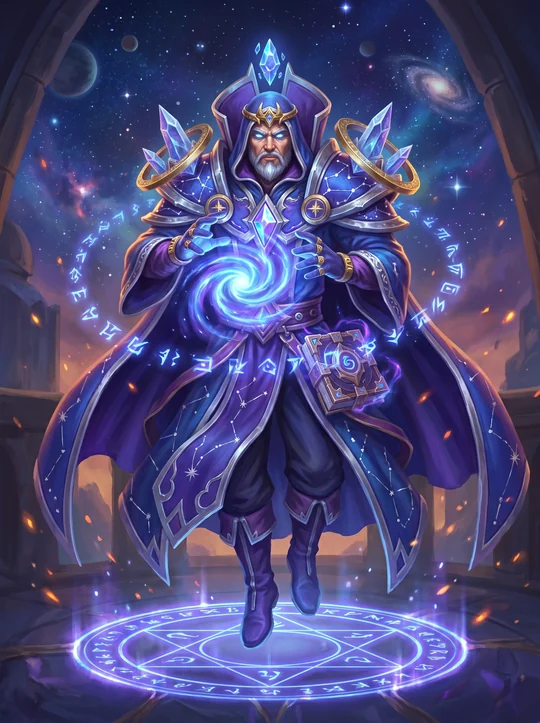
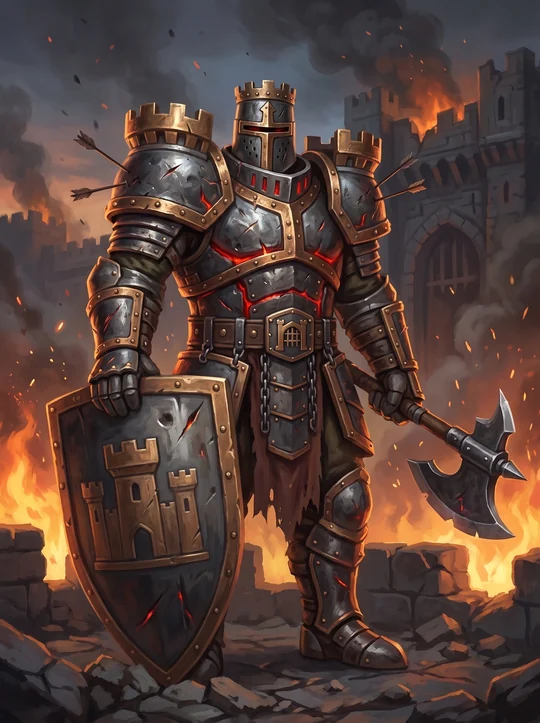
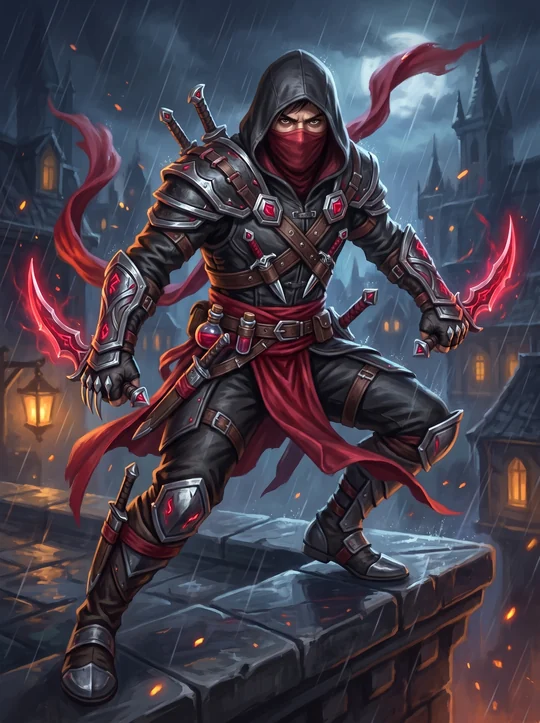
A boss fight is the same card duel, just on a shared board: your party against the boss and its entourage. To win, you need to know whom it attacks and why you can’t let the fight drag on.
Every dungeon, raid and world boss now plays its own deck — see Bosses with their own decks and Boss mechanics, and a guide to every boss — phases, the turn cycle, cards with numbers and role tips — is in How to beat. Threat, Taunt, chain-stun protection and fallen heroes work for them as described here. The hit and turn caps, the safe line, Onslaught, the generic party-wide strike and the shield and control rules below apply to wave guards and to open-world enemies (elites, land bosses).
Threat: whom the enemy attacks
Every enemy keeps its own threat count. Each point of direct damage to it adds threat to whoever dealt it. The enemy attacks whoever has the most threat.
- Damage over time (DoT) and healing don’t generate threat.
- At the start of a fight, while nobody has threat yet, the enemy attacks the first hero in the party.
- You can see in advance whom the enemy is about to hit — there’s a marker on the portrait.
Taunt
Taunt is the Class Power (the E key) of tank specializations. After it, all enemies attack only the tank right away and for 2 of their turns, whatever the threat count says, and the tank takes 40% less damage while taunting. The number on the Taunt badge shows how many enemy turns it still holds. Then it rests for 1 turn — ready again in 3 turns. If the boss is aiming at someone other than the tank, the game prompts: “Use Taunt!”.
In a party fight against a wave or open-world enemies one enemy hit takes at most 59% of a fighter’s Health and a whole enemy turn at most 75% (for a boss with its own deck these caps apply only on normal difficulty). A live tank (a hero in a tank branch) stays in stance the whole fight — Tank Mode: an enemy turn takes no more than 60% of its Health (70% on heroic and mythic raids and world bosses), once per fight Last Bastion holds a killing blow, and creatures hit it harder — it takes the blows for the party. A resident tank in stance (Taunt and the button’s rest turn) has the same caps as everyone, and the stance cuts the hit before the cap; without the stance (Taunt not pressed in time) its caps are higher — 80% per hit and 90% per turn. More in Roles in a group.
Taunt puts the tank’s threat above everyone’s, and the tank’s damage makes triple threat. Damage dealers: during Taunt’s rest turn, don’t out-damage the tank — or the boss will switch to you.
The safe line: will a fighter survive the next turn
The line is there in fights against waves, open-world enemies and a boss with its own deck on normal difficulty. In other fights against a boss with its own deck there is none: there are no caps, and the boss card tooltip tells you what a hit takes.
The caps count from a fighter’s maximum Health (after Hardiness and stance), and damage over time ticking at the end of the party’s turn counts toward the enemy turn. Nobody at full Health falls in one enemy turn. The danger is a pair of turns: if an enemy turn took more than half of a fighter’s Health, the next one takes up to 40% (the window to heal), on raid heroic up to 70%, world bosses up to 60%. Whoever has no more Health than that falls.
- A tank in stance works as on normal even on heroic: a heavy turn leaves it at about 25% Health, and anything above 40% survives the next one. On raid heroic a heavy turn leaves a damage dealer or healer at about 10%, and they need more than 60% back in a single turn.
- The shield does not count when a level-60 place boss is hitting: its hit eats the shield in full first. Against other enemies the shield counts.
- In combat you can see it on every party member’s Health bar: the line is the next enemy turn’s cap. Below the line the bar turns red, with “+N” — how much Health is missing. “☠ −N” is what damage over time takes at the end of the turn (the hatched part of the bar). If the tank is below the line, a warning shows above your hand; a healer is also warned about any party member below the line (“N more Health needed, the shield does not count”). Damage over time on the tank shows in large type above its portrait: “☠ −N/turn”, red when more than 15% of Health.
Enrage
If a fight runs longer than it was built for (roughly four rounds past the expected length), the enemy enrages: with each of its turns it hits 18% harder, and the stacks build up until the fight ends. Some bosses also enrage when their Health gets low. Enrage can’t be reset — a drawn-out fight is a lost fight.
For bosses with their own decks, on mythic enrage starts from party turn 12 — every boss turn is 8% stronger; on heroic — from turn 40, 8% per turn. In normal mode and keystones — as described above. A boss’s own enrage is on its page in How to beat.
Protection against chain stuns
After a stun, a hero is guaranteed 2 turns of their own before they can be stunned again — no matter who does the stunning, even a whole entourage taking turns. The rule works both ways: you can’t chain-stun an enemy either. Nothing makes a Morven (undead) skip a turn — not a boss stun, not enemies’ cards, not any other turn skip: instead, for the same turns they get just 1 crystal, and “Immune: the will weakens” pops up over them. In a dungeon a stun can only be removed by an item that cleanses yourself (arena brands, the Medallion of Zarhold, the Eye of the Storm Core): no racial cleanses in creature fights, and an ally’s cleanse does not remove a stun.
Fallen heroes
A hero who falls isn’t raised mid-fight: they’re out until the fight ends and watch the others fight on. The fight is lost only when everyone has fallen. After a defeat you can start the same fight again with no penalty.
Shields, control and party-wide strikes
These rules apply to enemies without a deck of their own: wave guards and open-world enemies. A boss with its own deck goes round its cycle — see Boss mechanics.
- An enemy hits the whole party at most once per 3 of its turns and never two turns in a row, however many cards it draws.
- A boss’s poisons and debuffs don’t stack: a repeat refreshes the duration instead of adding a copy, and there is a turn without them in between. Each healing or shield move is used at most once per turn.
- The cooldown is written in the move’s description — in the enemy inspect window.
- A boss shields itself at most once per 3 of its turns (some even less often), however many cards it draws: the cooldown is shared by all its shields, so the second card of a turn is never a shield.
- Control and a heavy hit never share a turn. If the boss stunned a hero, discarded or froze their cards or burned their crystals on its turn, that turn it hits no harder than half of a fighter’s Health and without Onslaught. After a heavy hit (Onslaught or a hit over half of Health) there is no control that turn.
- Your shield against a boss with its own deck. The shield takes an ordinary hit in full. Cold and test strikes go past shields — against them you need Health; hits on everyone, charges and chains are held by shields by half. The boss card says how a shield meets its hit.
- A phase change swaps the boss’s card cycle but gives it no Health back: a fallen boss does not rise.
Before a tough boss, bring consumables — one of each kind per fight: Consumables in combat.
Read next
Forming a group: roles and world residents
A party of 3 or 5 heroes, which roles each class can take, the “everyone or no one” rule and how world residents fill the empty spots.
Group roles: tank, healer, damage
A dungeon takes a tank, a healer and a damage dealer; a raid takes a tank, a healer and three. Who can do what, how threat and Taunt work, what each role does.
How combat works: turns, Crystals and your hand
A card duel: 6 cards in hand, 1 to 10 Crystals (11 for Grikx), 2 cards per turn from turn 10, a coin for going second, a minute per turn, an empty deck.
Consumables in combat: bandages, potions, food
Six kinds, one of each per fight: bandage, potion, mana, bomb, boost, device. Bandages heal 15–50% of Health, in PvP too; potions and bombs in PvE and duels.