MMORPG professions: crafting, gathering and how to make gold
Professions in the card MMORPG Zarhold: 12 professions, skill-ups by recipe colour, gathering, fishing, enchanting, the auction house and making gold.
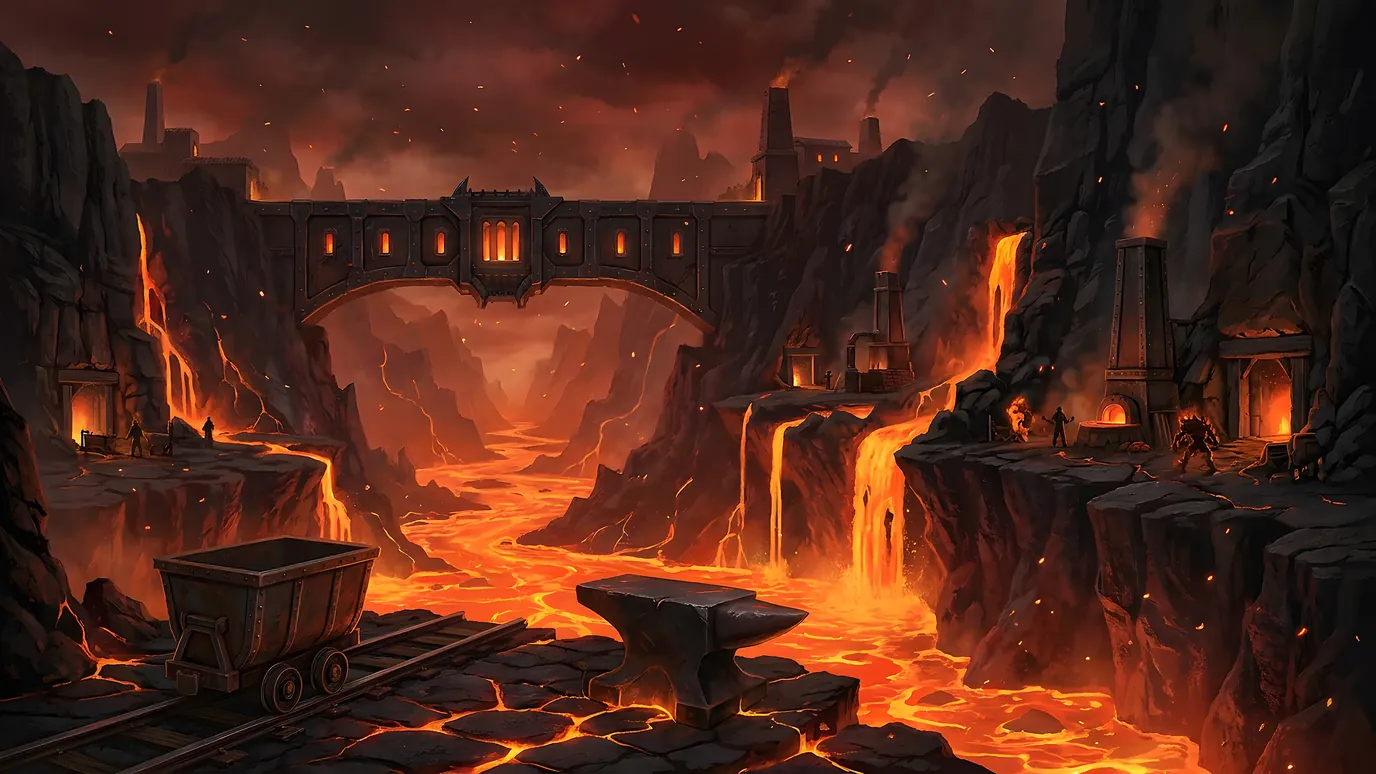
Professions are what turn an MMORPG from a string of fights into a living world with an economy. Some heroes mine ore and pick herbs, some forge armour and brew potions, and some make gold out of all of it. Let’s look at how professions work in Zarhold, a card MMORPG in your browser: what kinds there are, how skill grows, what enchanting and disenchanting give you and how to make gold from crafting.
Twelve professions: crafts, gathering and secondary
Zarhold has twelve professions in three groups.
- Crafts — Blacksmithing, Tailoring, Enchanting, Engineering, Leatherworking and Alchemy. They turn materials into gear, consumables and upgrades.
- Gathering — Mining, Herbalism and Skinning. They supply materials for the crafts.
- Secondary — Cooking, First Aid and Fishing. Everyone can have them, with no strings attached.
You can take two crafts from the start; a separate service can expand that to four slots. The gathering profession paired with a craft comes free and takes no slot: Mining for blacksmiths and engineers, Skinning for leatherworkers, Herbalism for alchemists. Enchanting and Tailoring have no pair. You can also learn gathering professions on their own, with no limit, and secondary ones with a single “Learn” button.
Professions are learned on the Professions screen — free, at any hero level. No trainers to hunt down: new recipes unlock by themselves as your skill grows.
How skill grows: the recipe colour decides
Each profession’s skill runs from 1 to 300 and grows by doing: crafting, gathering, disenchanting and fishing. The main rule is the recipe colour, which tells you how hard a recipe is for your current skill:
- orange — always gives skill;
- yellow — always gives skill too;
- green — gives skill about one time in three;
- grey — never gives skill.
A recipe turns yellow once your skill is 20 above its requirement, green at 40 and grey at 60. Some recipes give one skill point per craft, others two or three. Gathering spots and items to disenchant follow the same rule: their difficulty depends on the zone’s or the item’s level.
Hence a simple tip: level your profession on orange and yellow recipes and don’t waste materials on grey ones — they give no skill.
Gathering: ore, herbs, hides and fish
Each of the 26 zones has four kinds of gathering spots on its map: an ore vein, a herb bush, a beast track and a fishing spot. You only see them once you’ve learned the matching profession. Each spot gives one unit of material, then disappears and reappears one to five minutes later.
The higher the zone, the more valuable the material: there are eight tiers of materials, from the first zone up to lands of level 56 and above. You can only gather in the zone your hero is in — and a new zone opens no earlier than two levels before its range begins.
Hides can also be obtained another way: after you defeat a beast, you can skin its carcass — once per fight. And some things drop from enemies without any profession at all: cloth from humanoids and meat from beasts, in almost half of your fights.
Fishing — a little reaction game
Fishing in Zarhold isn’t a “get fish” button. You cast your line, wait for a bite — it comes after 3 to 8 seconds — and then you have four seconds to hit “Hook!”. Too early or too late and the cast is lost. On the other hand, about one cast in five brings a double catch, and a successful hook raises your skill if the fish in that water isn’t easy for you yet — or if it’s the best fish you can catch so far.
Crafts: what each one makes
- Blacksmithing — bars and gems, plate armour, weapons, plus sharpening stones and armour plates that upgrade finished gear.
- Leatherworking — cured leather, leather and mail armour, and kits that upgrade gear. Leatherworkers can also break leather and mail armour down into materials.
- Tailoring — cloth from raw fabric, and cloth armour.
- Engineering — parts, bombs, grenades and trinkets. Engineering goods work in fights with creatures and in duels, and are banned in the arena and on battlegrounds.
- Alchemy — potions, elixirs and flasks for fights with creatures, plus a once-a-day transmutation of one material into another.
- Enchanting — enchantment scrolls for gear, and disenchanting unwanted items.
There are 186 recipes in the game; engineers and blacksmiths have the most (38 each). Nearly all of them unlock as your skill grows, while 36 special ones come only from scrolls dropped by dungeon, raid and world bosses: 11 crafting recipes of skill 100–210 from dungeon bosses from level 10, and 25 epic and legendary ones from high dungeons, raids and world bosses.
Crafting in Zarhold is instant: no timers, no failed crafts, no “energy”. The only limits are materials, skill and recipes.
Enchanting and disenchanting
Enchantments are permanent gear upgrades. Weapons can be enchanted with Power, Hardiness or Health; armour with Health, Power, Resilience or Hardiness. An item holds one enchantment: a new one replaces the old. Any hero can apply a finished enchantment scroll — the profession is only needed to make it. Enchantments work on heirloom items too, and upgrades from blacksmiths and leatherworkers stack with them.
Disenchanting turns unwanted gear into enchanting materials. You need Enchanting learned — your skill level doesn’t matter. Green, blue and purple items can be disenchanted, and the higher the quality, the better the result: a green item gives dust, a blue one an essence, a purple one a crystal, a shard and an essence. Legendary, white and grey items can’t be disenchanted, and neither can heirloom items, unique turquoise items, personal legendary relics or quest items.
Cooking and First Aid
Cooking makes food that buffs your hero for fights with creatures. While the buff lasts — 15 minutes or three fights, or 20 minutes or four fights for the Stormfin Feast — your hero has more Health, and the best dishes add Power too. Only one food works at a time.
First Aid means bandages. They heal 15 to 50% of your maximum Health and, unlike potions, work both against creatures and in PvP.
How to make gold: five ways
Money in Zarhold is copper, silver and gold: a hundred copper make a silver, a hundred silver make a gold. Here’s where it comes from.
- Fights and quests. Enemies drop copper, and the higher their level, the more: at level 60 it’s tens of silver per victory. Quests pay on top of that.
- Dungeons and raids. In a dungeon your first clear pays gold in full, the second pays half, and after that nothing until a day has passed. In a raid gold is a share for the bosses that gave you loot (each boss gives loot once a day).
- Selling materials. Every crafter needs ore, herbs, hides and fish, and materials can be listed on the auction house.
- Crafting to sell. Blue items and potions that other heroes need are the classic way to profit from a profession. White gear, though, can’t be listed at auction.
- The merchant. You can always sell unwanted items at the Shop — not for much, but instantly.
How the auction house works
Zarhold’s auction house runs on buyout prices: the seller sets a price and the buyer takes the lot at once, no bidding. A lot stays up until it sells or the seller takes it down. Listing costs a 5-copper deposit, which you get back when the item sells, and a 5% commission is taken from the sale. The money from sales and the items you buy arrive by mail.
To send an item or gold to a specific hero, use mail — a letter with an attachment costs 1 silver — or a face-to-face trade. More in our article “MMORPG with friends”.
Which professions to choose
- Want to earn from day one? Take a craft with a paired gathering profession: Blacksmithing or Engineering (with Mining), Leatherworking (Skinning) or Alchemy (Herbalism). Gathering is easy to level along the way — gather in the zones you pass through and sell what you don’t need.
- Want to upgrade your own gear? Enchanting: enchantment scrolls and disenchanting unwanted items.
- Playing PvP? Remember that potions and engineering goods are banned in the arena and on battlegrounds, but bandages aren’t; in duels everything is allowed. First Aid is useful for everyone.
- Running dungeons? Alchemy and Cooking give buffs made precisely for fights with creatures. More about dungeons themselves in “Dungeons and raids”.
And don’t forget the secondary professions: they’re free, take no slot and help everyone.
Professions FAQ
How many professions can I learn?
Two crafts from the start; a separate service can expand that to four slots. Gathering and secondary professions take no slot: the one paired with your craft comes free, and the rest can be learned separately.
How do I level a profession quickly?
Craft orange and yellow recipes — they always give skill. Green ones give skill about a third of the time, grey ones never.
Can I switch professions?
Yes: you can unlearn a profession and learn another. But the skill of the one you unlearn is lost completely.
Where do I get rare recipes?
From scrolls dropped by dungeon, raid and world bosses: dungeons from level 10 give crafting recipes of skill 100–210, the finals of high dungeons and raids give epic and legendary ones. A scroll is rolled the moment the boss falls, on the first two runs per day (raid: per week).
The bottom line
Professions in Zarhold aren’t a chore but a path of their own: gather, create and trade. Pick two crafts that suit your style, level them on orange recipes, sell what you don’t need at auction — and the gold will start piling up. Start playing and pick your first profession today.
More on this: how to make gold, how to get a legendary.
Read next
Dungeons and raids in an MMORPG: bosses, loot and group play
What dungeons and raids are in an MMORPG and how they work in Zarhold: 23 dungeons, 6 raids, 3 world bosses, group roles, boss rules and loot.
Beginner’s guide: how to start playing a card MMORPG
A Zarhold beginner’s guide: signing up, creating a hero, the tutorial, first quests, the shop, talents and your first dungeon — all about levels 1 to 10.
MMORPG with friends in your browser: guilds, duels, trading and chat
How to play a browser MMORPG with friends: friends and chat, parties of up to five, guilds with a bank, friendly duels, trading and mail in Zarhold.