Lightbringer guide: tank, healer and damage dealer in one hero — talents, build, PvE and PvP
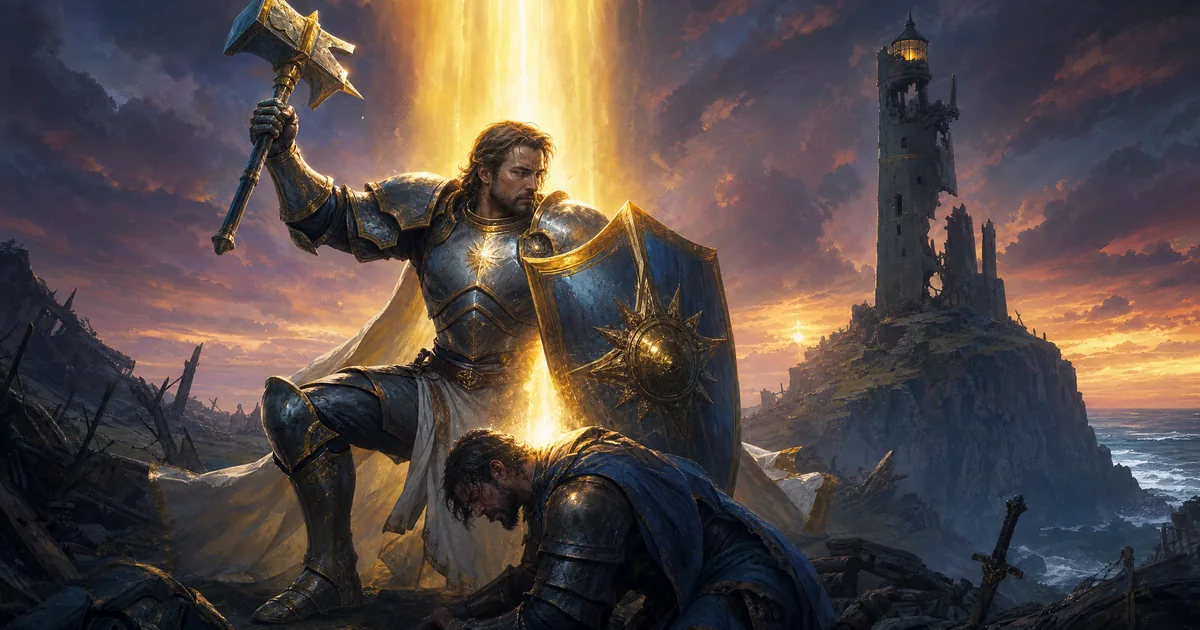
Lightbringer guide for the card MMORPG Zarhold: three roles in plate, healing and shields, key cards, talent trees, gear and tips for dungeons and arena.
The Lightbringer is a plate wearer who can do it all: hold the boss, heal the group and deal damage. Alongside the Druid it’s the only class in Zarhold open to all three roles. If you want to be useful in any group without locking yourself into one role forever, take a look at this class. In this guide we’ll cover how to play a Lightbringer: their cards and Class Power, which talent trees to take early on and at level 60, what to wear and how to play in dungeons, raids and the arena.
The Lightbringer at a glance
- Group roles: tank, healer or damage dealer — all three.
- Armour: plate — the heaviest type; anything lighter can be worn too.
- Resource: Mana. It’s the same Crystals everyone has: 1 on your first turn, one more each turn up to 10, and whatever you don’t spend is lost.
- Health at level 60 without gear: 545 — third after the Barbarian (632) and the Revenant (606).
- Cards: 23 of their own and 3 more from talents — one in each tree.
- Difficulty: medium. The deck is simple, but you have to keep an eye on your specialisation: it decides which role you can really fill.
Strengths and weaknesses
Strengths:
- three roles in one hero — there’s a place for you in any group;
- plate and shields on top of healing: the Lightbringer survives and mends what would drop a cloth healer;
- the healing Class Power can both heal an ally and hit an enemy, so it works solo too;
- two cards that hit every enemy at once and two strikes that also heal you;
- cleansing: one card removes harmful effects from you or an ally.
Weaknesses:
- no 1-Crystal cards and almost no Mana return — the cheapest cards cost 2, so the first turns are quieter than for classes with “fuel” cards;
- no dual wielding and no taunt card: a Lightbringer tank holds the boss with the Class Power alone;
- the trees are unusual: the healing power sits in the judgement tree, while most of the healing and shield talents are in the fortitude tree, so you have to watch your specialisation.
The Lightbringer’s deck: key cards
In Zarhold you don’t build your deck by hand: all 23 class cards and the cards of your learned talents go into battle, and if you have fewer than thirty cards the deck is topped up with copies of cheap ones. Every card with its description is in the Lightbringer’s Spellbook. Here’s what the class is built on.
Healing
Three direct heals for 2, 4 and 5 Crystals (7, 14 and 18 Health base), a heal over time (5 at the end of each of your turns for 3 turns) and two strikes, for 4 and 5 Crystals, that also restore your Health. Healing cards can be aimed at an ally: F1 is you, F2–F5 your allies. Healing beyond full Health becomes a shield, so the excess isn’t wasted.
Defence
Two shields (12 and 20 base) and an aura that cuts damage you take by 30% for 3 turns. Its counterpart is a blessing that adds 30% to your damage for the same 3 turns.
Cleansing and tempo
The 2-Crystal cleanse removes every harmful effect from you — debuffs, curses, bleeds; from an ally it removes the same, except effects that make them lose a turn. Another card draws 2 cards and returns 1 Mana — the only “refund” in the deck.
Damage and control
- two judgements — strikes after which the target takes 20% more damage from all sources for 3 turns;
- two strikes with damage over time — the target burns at the end of each of their turns for 3 turns;
- two 5-Crystal cards that hit every enemy on the field;
- a stunning card — the enemy loses their turn;
- direct light strikes for 2, 3 and 4 Crystals and an 8-Crystal finisher.
Base card numbers grow with Power: the more a card costs, the bigger the share of Power it gets.
The Lightbringer’s Class Power
Your Class Power is the round button that costs 1 Crystal, once per turn. Which one you have depends on your specialisation — the tree with the most points in it:
- no specialisation and the holy flame tree — damage to an enemy and the same amount of Health for you;
- the judgement tree — a healing power: on an ally it heals, on an enemy it deals damage of almost the same size. In dungeons, raids and world boss fights it heals the whole party: the chosen ally gets the full heal plus a shield, everyone else gets a bonus to their Health;
- the fortitude tree — Taunt: bonus armour, and in a party against creatures enemies attack you right away and for 2 of their turns, dealing 40% less damage to you; usable again after 3 turns. One-on-one and in PvP, Taunt only gives armour.
You can drag the healing power onto an ally’s portrait, and on the keyboard Shift+E uses it on yourself or on the ally picked with F2–F5. The numbers for every power by tree are in the Class Power reference.
Lightbringer talents: three trees
Talents unlock at level 10 and you get a point for every level — 51 by level 60. Each row of a tree opens for every 5 points in it. The Lightbringer’s tree is shorter than everyone else’s: each tree holds 9 talents in four rows, so the top talent — the tree’s final talent — needs 15 points instead of 20 and is available from level 25. A hero can only have one top talent per loadout. Each tree has 24 ranks, 72 in total.
- The first tree — the school of judgement. It grants the healing power, so this is the healer’s tree. The talents themselves strengthen light strikes and the debuffs that make a target take more damage. Its talent card is a 3-Crystal strike after which the target takes 30% more damage for 3 turns. The top talent makes the 8-Crystal finisher and the 4-Crystal light strike 35% stronger against a target under the judgement debuff.
- The second tree — the school of fortitude. The Lightbringer’s only tree with Taunt — the tank’s tree. Its talents strengthen healing, shields and Health. Its 4-Crystal talent card puts up a shield and heals you at the end of each of your turns for 3 turns.
- The third tree — the school of holy flame. Attacking: the Class Power hits and heals you. The talents strengthen damage over time and strikes on all enemies. Its 5-Crystal talent card hits every enemy and sets them burning for 3 turns. The top talent adds 12% damage to spells against a target under the effect of one of the class’s two damage-over-time cards.
The talent cards sit in the third row of their trees: level 20 at the earliest. Every tree with its talent and rank counts is in the Talent trees reference.
What to take early on
Until level 20 you have only one specialisation. For open-world quests either the holy flame tree (the power hits and heals you) or the judgement tree works: its healing power deals damage to an enemy, so the healing tree plays solo as well. Put your points into one tree in a row — that opens the next rows and the talent card faster.
A level 60 build
From level 20 a hero has two specialisations. A handy setup is one for your main group role and one for quests or a second role:
- 16 points in the main tree: 15 to reach the top talent plus the top talent itself;
- the other 35 into whatever supports the role: healing, shields and Health from the fortitude tree for a healer or a tank, holy flame bonuses for a damage dealer;
- 51 points are enough to fill the main tree completely (24 ranks) and take everything in a second tree except its top talent (23) — with 4 points to spare.
An important detail for healers: if you put more points into the fortitude tree than into the judgement tree, fortitude becomes your specialisation — and Taunt replaces the healing power. Pin the judgement tree manually with the “Make it my specialization” button on the talents screen. Details are in the knowledge base article Specialisations and loadouts.
Switching specialisations, loadouts and talent resets are free. How to count points and put a build together is covered in “Talents in a card RPG”. You can test a new build right away: the Try out button in the talents window takes you to the training dummy.
Lightbringer gear and weapons
- Armour: plate. You can also wear mail, leather or cloth, but your own type gives the most protection.
- Weapons: sword, axe, mace and polearm.
- Off hand: shield, tome or orb.
- Two-handed: polearm, and the two-handed versions of the sword, axe and mace.
- Two weapons: no. Hands are equal for every class: a one-hander plus an off-hand item carry as many stats as a two-hander.
- Relic: the Lightbringer has a class relic of their own — it goes in the ranged slot.
At level 60 the Lightbringer’s goal is the Tier 1 set Raiment of the Last Lighthouse: eight pieces of item level 232 from heroic raids and world bosses. The 2-, 4-, 6- and 8-piece bonuses depend on your active tree and don’t work in PvP. Details are in “Tier sets in an MMORPG”, and every class’s armour and weapons are in the Armour and weapons reference.
Which race to choose for a Lightbringer
Any race can be a Lightbringer. If you want to squeeze out every bit, match the race’s permanent bonus to your role:
- for a tank — Health: the Gartan get +10%, the Durgar +8%, the Grumak and the Vaerin +5% each;
- for a healer or damage dealer — Power: it strengthens healing, damage and shields alike. The Kogran, Nakar and Shaydar get +6% each, the Velion +5%, the Selenar +3% Power and −3% damage taken;
- for the arena consider the Morven: no crowd control makes them lose a turn — while stunned they simply have 1 Crystal.
Race is a nice extra, not a life sentence. Every bonus is in the All races reference.
The Lightbringer in PvE: dungeons and raids
A dungeon takes a tank, a healer and a damage dealer; a raid or a world boss takes a tank, a healer and three damage dealers. The Lightbringer can fill any of these slots.
As a healer
- Queue as a healer only with your specialisation in the judgement tree — that’s the tree with the healing power.
- In a group run the power heals the whole party: the chosen ally gets all of it plus a shield, everyone else gets a Health bonus. With no target chosen it heals the most wounded.
- Heal ahead of time: healing beyond full Health turns into a shield. The board shows who every enemy is targeting — keep that hero shielded.
- Remove bleeds, poisons and debuffs from allies with the cleanse card; it doesn’t remove effects that make an ally lose a turn.
- Hits on “everyone” strike the whole group: heals over time and shields are what you want before them.
As a tank
You need the fortitude tree with Taunt. A boss attacks whoever has dealt it the most damage: Taunt pulls enemies onto you for 2 of their turns right away, then there’s a rest turn — and it’s ready again after 3 turns. A tank’s damage makes triple threat, so during the rest turn hit the boss rather than only healing yourself: healing creates no threat. The Lightbringer has no taunt card in the deck — watch the button and the “Use Taunt!” prompt.
As a damage dealer
The holy flame tree: damage over time and two cards that hit all enemies work well against a boss’s retinue. Damage over time creates no threat, so it’s hard to pull the boss off the tank with it. A long fight is risky: the boss enrages, and every stage adds 18% to its damage.
How boss fights work is in the knowledge base article Boss fights, step-by-step raid prep in “Your first MMORPG raid”, and the roles in detail in Group roles.
The Lightbringer in PvP: arena and duels
In the arena (1v1, 2v2, 3v3 and 5v5), on the battleground and in duels, Taunt doesn’t hold opponents and only gives armour, so in PvP the Lightbringer plays the judgement or holy flame tree.
- One-on-one, the holy flame power and the strikes that heal give the Lightbringer staying power: every turn they heal a little while dealing damage.
- In the team arena a Lightbringer healer keeps allies up with the healing power and healing cards, while the cleanse removes poisons and bleeds from them.
- The stunning card takes away your opponent’s turn, but afterwards the target has at least 2 turns of their own when they can’t be stunned again.
- Remember the PvP rules: you can’t lose more than 60% of your Health in a round; from your 10th turn healing and shields weaken by 10% a turn, and the third and later heals in a turn are half as strong; a card shield lasts 2 turns and can’t exceed 30% of your Health; the deck isn’t reshuffled — once you run out of cards, fatigue damage begins.
- Defence in PvP is Resilience from PvP gear; Hardiness from regular gear doesn’t work in the arena.
All the rules are in the knowledge base article Special PvP combat rules, and modes and ratings in “PvP in a card game”.
Common beginner mistakes as a Lightbringer
- Queueing for the wrong role. A healer needs the judgement tree, a tank the fortitude tree. Check your specialisation before the queue: the game will warn you if your power doesn’t fit the role.
- Losing track of your specialisation. You put more points into fortitude for its healing talents — and it became your specialisation. Pin the right tree with “Make it my specialization”.
- Playing a third heal in one PvP turn. The third and later heals in a turn are half as strong — spread your healing across turns.
- Forgetting to cleanse. Bleeds and poisons on the tank eat more Health than it seems.
- Wearing Hardiness gear in the arena. In PvP only Resilience protects you.
Lightbringer FAQ
Which role should a Lightbringer choose?
Whichever you enjoy: all three work. For solo quests the holy flame or judgement tree is handy; for dungeons, take the role your group is missing. From level 20 you can keep two specialisations, for example healer and tank.
Can a Lightbringer be both a healer and a tank?
Yes, but not at the same time: your active specialisation decides the role. From level 20 keep a healing specialisation and a tanking one and switch with one button outside combat — for free.
Why does the Lightbringer’s top talent unlock earlier than other classes’?
Their trees have four rows, not five. So the top talent needs 15 points in its tree instead of 20, and you can take it as early as level 25.
Can a Lightbringer wield two weapons?
No. Their off hand holds a shield, a tome or an orb, or both hands go to a two-handed weapon.
Does the Lightbringer’s power heal the whole group?
In dungeons, raids and world boss fights, when allies are around — yes: the chosen ally gets the full heal and a shield, the rest get a Health bonus. In PvP and one-on-one fights the power heals a single target.
The bottom line
The Lightbringer is the pick for anyone who wants a sturdy hero and freedom of role: today you hold the boss, tomorrow you heal the group, and solo you hit and heal with a single button. Start with the holy flame or judgement tree, add a second specialisation for your group role at level 20 — and keep an eye on which tree is currently your main one. Create a Lightbringer and find your role. And if you’re still choosing a class, see “Which class to choose”.
Read next
Which class to choose: tank, healer or damage dealer in a card MMORPG
Which class to choose in the card MMORPG Zarhold: what tanks, healers and DPS do, how the 10 classes differ, their armour and Health, talents and races.
Talents in a card RPG: the tree, specialisations and a build for every role
The talent tree in Zarhold: 51 points by level 60, rows and top talents, two specialisations, loadouts and how to build for solo, groups and the arena.
Your first MMORPG raid: a beginner’s guide to preparation, roles and boss tactics
How to clear your first raid in Zarhold: what you need first, how to gather five, what tanks, healers and DPS do, how to avoid enrage, and the loot.