PvP in a card game: a 1v1 to 5v5 arena and battlegrounds
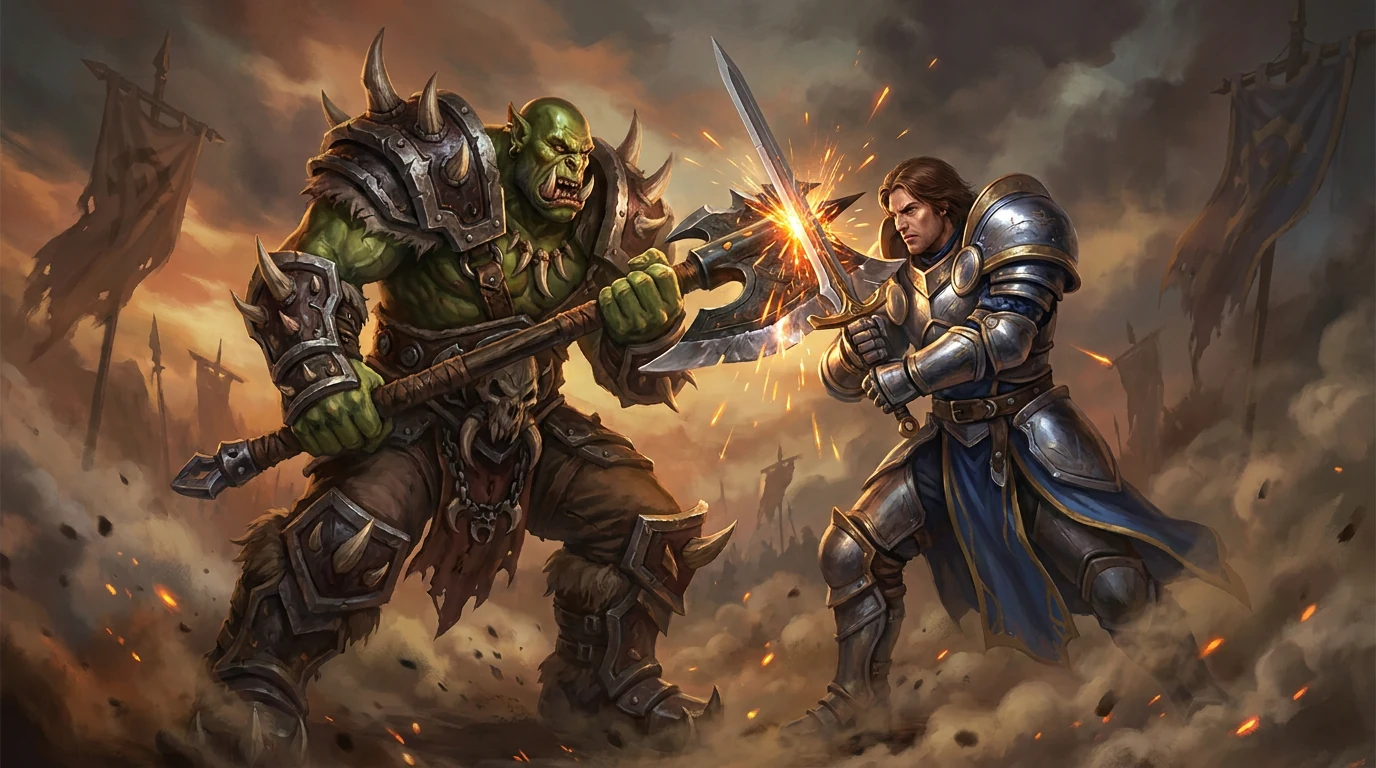
How PvP works in the card MMORPG Zarhold: 1v1, 2v2, 3v3 and 5v5 arena, two battleground modes, rating, seasons, rewards and the Resilience stat.
In button-based PvP, the winner is often whoever clicks faster and has the rotation down better. PvP in a card game works differently: finger speed decides nothing — you have a hand, crystals and a minute per turn, and your opponent has exactly the same. Whoever calculates more precisely wins. Here’s how PvP works in Zarhold — a card MMO-RPG where you fight other heroes in the arena, from 1v1 to 5v5, and on battlegrounds.
How card PvP differs from button PvP
Combat in Zarhold is a card duel: six cards to start, one new card at the start of each turn, and crystals that grow by one every turn, up to ten. The rules themselves are covered in “Card MMORPGs: what they are”. PvP adds a few rules on top that keep fights even:
- No critical hits. A random crit won’t steal a game you played better.
- Nobody falls in a single round. You can’t lose more than 60% of your maximum Health in one round, so there’s always an answer to an all-in.
- Fights don’t drag on forever. From turn 10, healing and shields get 10% weaker every turn, and the third heal onwards in a single turn works at half strength.
- Consumables kept to a minimum. Bombs and potions are banned in PvP, as are almost all activated trinkets; bandages are allowed.
The card arena: four sizes, four ladders
The arena has four formats — 1v1, 2v2, 3v3 and 5v5 — and each has its own ladder and rating. You can enter the arena from level 1, and manual fights are unlimited: play as much as you like.
The 1v1 duel
Your opponent is a hero from the same ladder, with their own deck, talents and gear. You don’t have to wait for a suitable opponent to come online: the fight starts right away. A duel is the best way to learn your class: it’s just you against someone else’s deck, and every mistake shows.
Team arena: 2v2, 3v3 and 5v5
In a team fight you lead your hero on a shared board while allies and opponents fight alongside. What matters here isn’t just what you play but when: a shield at the right moment saves an ally, and a strike on the enemy healer can decide the whole fight. Team arena results are calculated by the server, from its own random seed and the log of moves.
How rating works
Rating uses the Elo system. Everyone starts at 500. You gain rating for a win and lose it for a defeat, and beating a stronger opponent is worth more than beating a weaker one. There are two ladders by level: heroes below level 60 are on the rising tier, level-60 heroes on the top tier. Every ladder is open on the website in the Ratings section.
Battlegrounds: Brawl and Multi-Duel
Battlegrounds are five-versus-five fights. There are two modes:
- Brawl — a team battle on one shared board: you lead, while allies and opponents fight alongside.
- Multi-Duel — five one-on-one duels at once. You play yours, the other pairs are resolved automatically, and the side that wins more duels takes the battleground.
In Multi-Duel you control a fifth of the result, yet your duel can be the deciding one: if the other four pairs split two–two, the battleground comes down to how you play. Battlegrounds have their own rating ladder, separate from the arena.
Seasons, titles and rewards
The season
A PvP season is designed to last 60 days. When it closes, ratings in every mode reset to 500 and the race starts over: the ladder never stagnates, and every newcomer gets a shot. The first season was called First Blood.
Currency and the PvP shop
Arena wins earn Arena Points: in a duel, 10 per win plus up to 10 more if your opponent was stronger than you; in team fights, 10 for every fighter on the team. On battlegrounds a win earns 150 Honor. Both currencies have a weekly cap: 1,000 Arena Points and 5,000 Honor. Now and then an arena win also brings a bonus — a piece of PvP gear for your level, straight into your bag.
You spend Arena Points and Honor on gear in the PvP shop: items come in tiers every 5 levels, rare and epic, and every piece has Health, Resilience and Power. The same item can be bought with either Arena Points or Honor — in Honor it costs five times as much.
Titles and brands
Rating achievements run from Contender at 1,200 to Merciless at 2,500 in any mode, and some of them come with a title — Duelist at 1,800, for example. They’re all listed in the Achievements section.
And at the end of each season of the duel arena, the best players receive turquoise brands: the Champion’s Brand for first place, the Medalist’s Brand for second and third, and the Fighter’s Brand for fourth through tenth. A brand is bound to your account, gives +1 to all stats and, once per fight, removes all harmful effects and puts up a shield.
Resilience: defence that only works in PvP
The key PvP stat is Resilience. Each item gives a whole number of Resilience points, and their total turns into a percentage reduction of damage from other players: 6 points make 1%, past 210 points each point is worth half as much, and the cap is 54%. A full epic set gives about 40%. Resilience does nothing against creatures — there, protection comes from Hardiness, its PvE mirror.
Your race plays a part too: each of the eleven has an ability against players. A Velion, for instance, removes all harmful effects from themselves and gains +15% damage for two turns, while a Durgar cuts incoming damage by 40% for one turn.
How to prepare for PvP in a card game
- Start with 1v1 duels. That’s the fastest way to get used to your class and learn to read your opponent’s hand.
- Set up a second specialisation. From level 20 a hero can have two talent specialisations: keep one for quests and dungeons and the other for the arena.
- Put together a Resilience set. The PvP shop has gear for every level, starting from the first.
- Study other builds. See how the ladder leaders are geared — their heroes are open in the Armory.
- Break down your fights. Discuss games and tactics on the forum: taking apart someone else’s fight teaches as much as your own.
You can also practise on a friend: a friendly duel has no rating and no rewards — more in “MMORPG with friends”. And if you’re still choosing a class for the arena, have a look at “Which class to choose”.
PvP FAQ
Do I have to reach level 60 to play PvP?
No. The arena and battlegrounds are open from level 1, and heroes below 60 have their own ladder — the rising tier.
How many times a day can I enter the arena?
As many as you like when playing manually. Only the currency has a cap: you can earn up to 1,000 Arena Points and 5,000 Honor a week.
Does Resilience work against monsters?
No, only against other players. Against creatures you’re protected by Hardiness.
The bottom line
PvP in a card game is chess with magic and swords: you don’t lose because of a slow connection or an awkward keyboard, but because of a move you could have played better. Jump into the game and see how well you play your hand.
Read next
Which class to choose: tank, healer or damage dealer in a card MMORPG
Which class to choose in the card MMORPG Zarhold: what tanks, healers and DPS do, how the 10 classes differ, their armour and Health, talents and races.
Card MMORPGs: what they are and why a deck beats a hotbar
What makes a card MMORPG different and why a deck beats a button rotation — explained through Zarhold: your hand, crystals, talents and ten classes.

MMORPG with friends in your browser: guilds, duels, trading and chat
How to play a browser MMORPG with friends: friends and chat, parties of up to five, guilds with a bank, friendly duels, trading and mail in Zarhold.