Which profession to choose in an MMORPG: craft combos for raids, PvP and gold
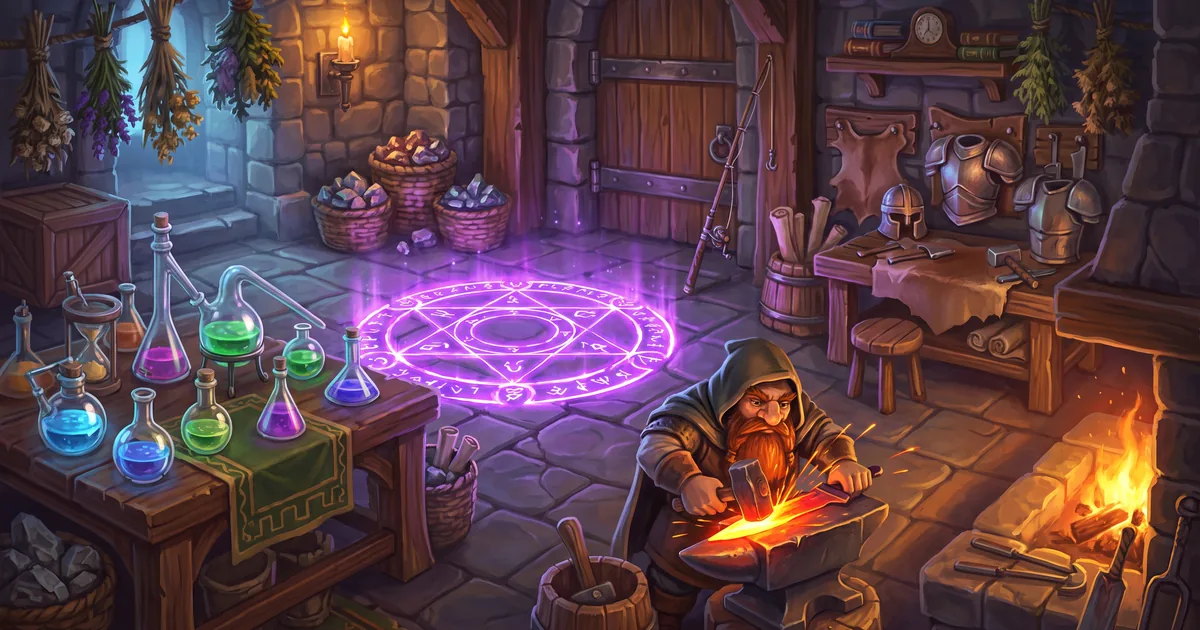
Which two crafts to take in Zarhold: what each of the six makes, which combos feed each other, and what to pick for raids, PvP, trading or solo play.
Choosing a profession in an MMORPG feels minor — until you discover that half the materials you need come from someone else’s craft. In Zarhold your hero has two crafts, and you can pick them so that one feeds the other. Here’s what each of the six crafts makes, which combinations work best, and what to take for raids, PvP, trading and solo play.
In short: what to pick for your goal
| Goal | What to take | Why | |---|---|---| | Raids and dungeons | alchemy, enchanting | potions and elixirs for fights against creatures, enchants for your gear | | PvP | first aid (for everyone), enchanting | only bandages work in the arena, and armour enchants add Resilience — defence against players | | Trading | a combo with shared gathering: blacksmith + engineer | one gathering profession for both, products go to the auction house | | Solo play | leatherworking plus anything | the most self-sufficient craft | | Everyone | cooking, fishing, first aid | secondary professions, they take no slots |
Here’s why.
How professions work in Zarhold
- Twelve professions: six crafts, three gathering professions and three secondary ones.
- Two crafts from the start. You can expand to four slots with a separate service, but two are enough to cover your own needs.
- Gathering comes bundled and takes no slot: blacksmiths and engineers get mining, leatherworkers get skinning, alchemists get herbalism. Enchanting and tailoring have no pair.
- Secondary professions — cooking, first aid and fishing — can be learned by any hero on top of their crafts.
- Learning is free and possible at any level; skill grows from 1 to 300 through work, not through your hero’s level.
Of 173 recipes, 149 unlock on their own as your skill grows; the other 24 come from scrolls dropped by bosses. Crafting is instant and never fails. Details: How professions work.
The six crafts: what each one makes
- Blacksmithing — bars and gems, plate armour, weapons, sharpening stones and armour plates to upgrade gear.
- Leatherworking — cured leather, leather and mail armour, kits to upgrade items. A leatherworker can also break down unwanted leather and mail armour back into materials.
- Tailoring — cloth and cloth armour.
- Engineering — parts, bombs, grenades and devices. They work against creatures and in duels, but are banned in the arena and on battlegrounds.
- Alchemy — potions, elixirs and flasks for fights against creatures, plus a once-a-day transmutation of one material into another.
- Enchanting — enchant scrolls for gear and disenchanting unwanted items into materials.
Crafted items become personal only when equipped: until then you can sell them on the auction house, mail them or give them to a friend.
Combos that feed each other
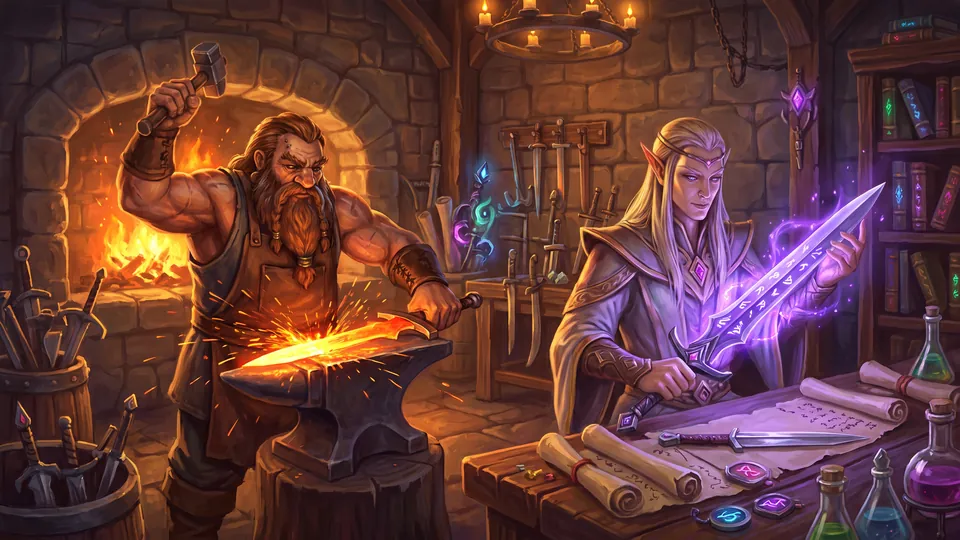
It’s best to take two crafts where one makes what the other uses. These combos come straight from the game’s recipes:
- Tailor + enchanter. From skill 150 a tailor needs enchanting dust, and cloaks and robes need essences and crystals. An enchanter gets all of that by disenchanting, and the tailor’s green and blue items go into disenchanting. Neither needs a gathering profession.
- Engineer + blacksmith. Both use mining — one gathering profession for two crafts. Only the blacksmith makes silver bars, which the engineer needs; only the engineer makes flux, which the blacksmith needs. The one downside: you get just one gathering skill.
- Alchemist + enchanter. Once a day the alchemist turns essences and dust into radiant shards (from skill 175) and crystals (from 275) — and disenchanting provides the raw materials. Shards are needed by enchanters, and crystals also by blacksmiths, leatherworkers and tailors.
- Cooking + fishing. From skill 80 every dish needs fish — fishing provides it. Both are secondary, so any hero can take them.
Leatherworking is the most self-sufficient craft: skinning comes bundled, salt is sold by the vendor, and unwanted armour can be broken down into leather. A good base if you don’t want to rely on others. All combos: Profession combos.
Professions for your play style
For raids and dungeons
In a fight you can use one consumable of each kind: a bandage, a healing potion, a mana potion, a bomb, an elixir and a device. Potions and elixirs come from alchemy, bombs and devices from engineering, and food with Well Fed adds Health and Power in fights against creatures. Enchants are a permanent boost, and any hero can apply a finished scroll. In dungeons every party member gets materials from enemies after every fight — cloth, bone, dust, ore — so a run pays off twice for a crafter.
For PvP
In the arena and on battlegrounds only bandages work — they come from first aid, which everyone can learn. Potions, bombs and engineering items don’t work there (in duels everything does). Defence against players — Resilience — comes from PvP gear, and crafts add more on top: armour enchants, the blacksmith’s armour plate and the leatherworker’s and tailor’s reinforced kits (+4 Resilience, skill 200).
For trading
Crafted items and materials sell on the player auction house — players set the prices themselves. A combo with shared gathering saves time, and an alchemist with crystals supplies four crafts at once. How the auction house works: The MMORPG auction house.
For solo play
Leatherworking with skinning needs nothing from other players, and gathering is easy to level as you go — ore veins, herbs and animal tracks are separate for every hero, and a gathered node comes back after a few minutes.
Can I change my mind?
Yes. You can forget any profession — the skill is lost, and you can learn it again for free, starting from skill 1. Recipes from scrolls stay with your hero. If your hero has a craft swap, the removed craft goes into storage with its full skill and can be brought back at any time. How to level fast: Profession levelling to 300.
Choosing a profession: FAQ
How many crafts can I take?
Two from the start. A separate service can expand that to four slots. Gathering and secondary professions don’t use slots.
Does a profession depend on my hero’s level?
No. You can learn from level 1, and skill grows through work. The best materials are in higher-level lands, though.
Which profession makes the most gold?
There’s no single answer: players set auction house prices, and they change. A safer bet is a combo where one craft feeds the other — you buy less and sell your surplus.
Do I need to learn a gathering profession separately?
Usually not: blacksmiths, engineers, leatherworkers and alchemists get their gathering profession bundled. Tailors get cloth from humanoid enemies, and enchanters get their materials from disenchanting.
The bottom line
A good pair of crafts serves your goal and feeds itself: tailor and enchanter, engineer and blacksmith, alchemist and enchanter, or a self-sufficient leatherworker. Plus the three secondary professions — for everyone. Open the game, check the Professions screen (the K key) and start with the combo that fits your play style. For the bigger picture, read MMORPG professions.
Read next
MMORPG professions: crafting, gathering and how to make gold
Professions in the card MMORPG Zarhold: 12 professions, skill-ups by recipe colour, gathering, fishing, enchanting, the auction house and making gold.
Profession levelling: how to reach skill 300 and forge a legendary
How to level professions fast in an MMORPG: recipe colours, gathering and skinning, Lucky Hour skill-ups, boss recipe scrolls and legendary forging.
MMORPG auction house: how to sell items, trade with players and make gold
The auction house in the MMORPG Zarhold: listing and buying lots, deposit and fee, stacks of 20, what can’t be sold, mail, trade and how to make gold.